Global supply-demand imbalance, rising energy costs, and strict environmental regulations push up EPS production costs, with the market to maintain a volatile upward trend in 2026.
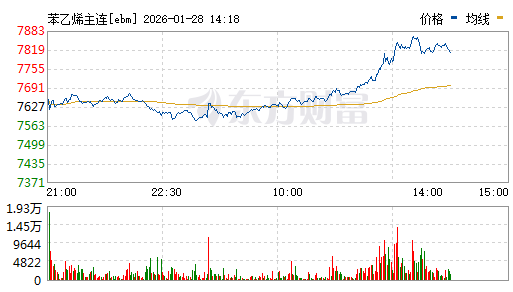
January 28, 2026 – The global market for Expandable Polystyrene (EPS) raw materials has witnessed a continuous upward price trend since the second half of 2025, putting significant cost pressure on downstream industries such as construction, cold chain logistics, and packaging. Industry data shows that the average price of EPS Beads has increased by 3.2% year-on-year in 2025, and the upward momentum is expected to persist in the first half of 2026, driven by multiple factors including upstream monomer price fluctuations, supply-side structural adjustments, and strong downstream demand.
Core Driving Factors Behind the Price Rise
1. Styrene Monomer Volatility Becomes the Primary Driver
Styrene monomer (SM), accounting for over 85% of EPS production costs, is the main factor affecting EPS prices. According to data from the International Petroleum and Petrochemical Association (IPPCA), the average global price of styrene monomer has surged by 5.8% month-on-month in January 2026, reaching $1,280 per ton. This upward trend is mainly driven by tight supply of crude oil and naphtha, the upstream raw materials of styrene. OPEC+’s continued production cuts have kept crude oil prices stable above $85 per barrel, while regional supply disruptions in the Middle East and Europe have further constrained naphtha output, pushing up the production cost of styrene monomer.

2. Supply-Side Restrictions Intensify Amid Environmental Policies
Stringent environmental regulations worldwide have led to the shutdown or capacity reduction of low-efficiency EPS raw material production facilities, exacerbating supply tightness. In China, the world’s largest EPS producer and consumer, local governments have strengthened emissions control on petrochemical enterprises, with over 15% of small and medium-sized styrene production lines suspended since the fourth quarter of 2025. In the European Union, the Carbon Border Adjustment Mechanism (CBAM) has increased the production costs of high-emission chemical enterprises, prompting some manufacturers to reduce output or shift production to regions with lower carbon costs, further tightening the global supply of EPS raw materials.
3. Strong Downstream Demand Boosts Price Momentum
Robust demand from downstream industries has provided strong support for the continuous rise in EPS raw material prices. The construction industry, the largest consumer of EPS (accounting for about 60% of total demand), has shown a recovery trend in major markets. In Southeast Asia, infrastructure construction projects in Vietnam, Indonesia, and Thailand have accelerated, driving up demand for EPS insulation materials. The cold chain logistics industry has also seen steady growth amid the global recovery of cross-border trade, with EPS packaging materials in high demand for fresh food and pharmaceutical transportation. Additionally, the packaging sector for electronic products and consumer goods has maintained stable demand, further consolidating the upward trend of EPS raw material prices.
Market Trend Forecast for 2026
Looking ahead to the whole year of 2026, the global EPS raw material market is expected to maintain a volatile upward trend, with price fluctuations mainly affected by three key factors. Firstly, crude oil prices are likely to remain in the range of $80-$90 per barrel due to OPEC+ production policies and geopolitical risks in the Middle East, which will continue to support the high level of styrene monomer prices. Secondly, supply-side constraints will persist: environmental policies in major producing countries will not be relaxed in the short term, and the expansion of new production capacity will be limited by high investment costs and long construction cycles, making it difficult to significantly improve supply tightness.
However, there are also potential downward risks. If the global economy slows down more than expected, downstream demand in the construction and packaging industries may weaken, putting downward pressure on EPS raw material prices. In addition, the gradual release of new styrene production capacity in the Middle East and North America in the second half of 2026 may ease supply tensions to a certain extent.
Industry analysts suggest that downstream enterprises should actively adjust procurement strategies, lock in long-term supply contracts with core suppliers to avoid the impact of short-term price fluctuations, and accelerate the research and development of environmentally friendly alternative materials to reduce dependence on EPS raw materials.
About EPS Raw Materials
Expandable Polystyrene (EPS) raw materials are widely used in construction insulation, cold chain packaging, electronic product buffering, and other fields due to their lightweight, thermal insulation, and shock absorption properties. The global EPS market size is expected to reach $38 billion by 2028, with Asia-Pacific remaining the largest consumption region, driven by rapid urbanization and infrastructure construction.