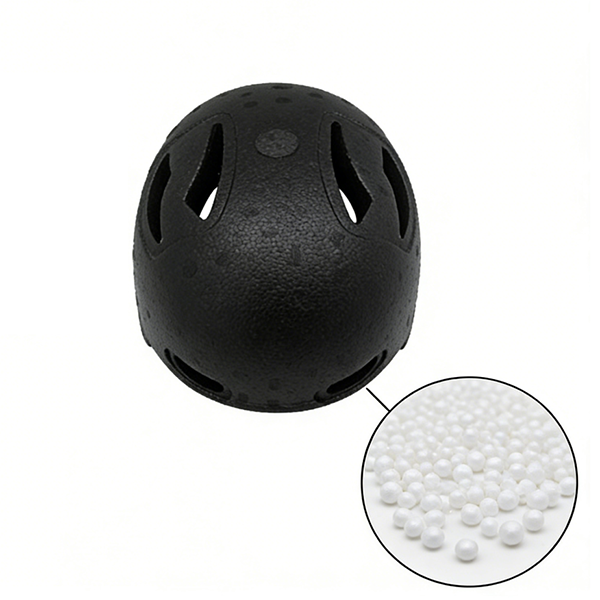
Product Introduction:
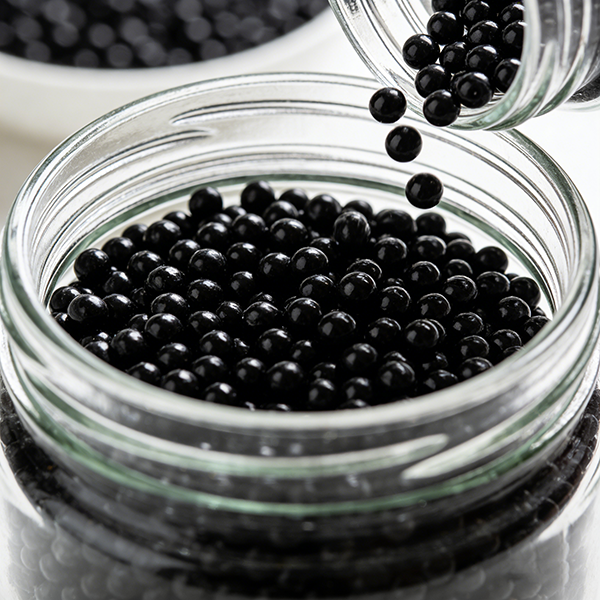
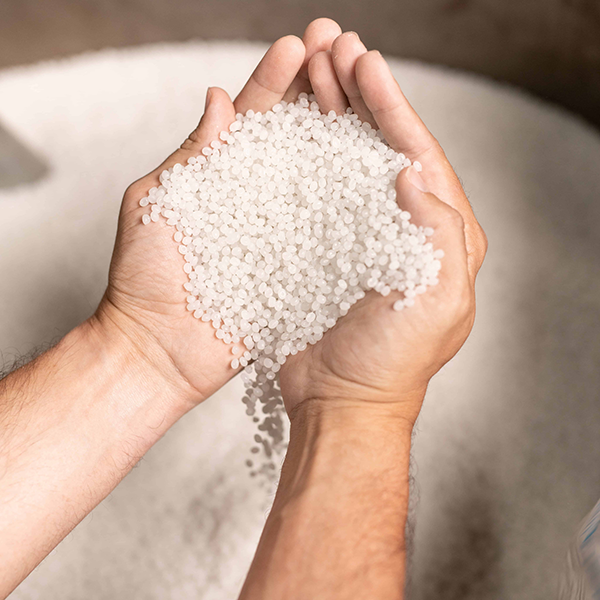
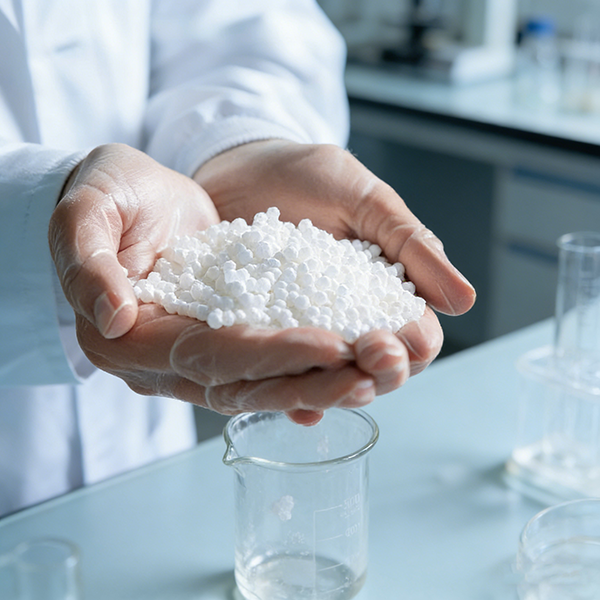
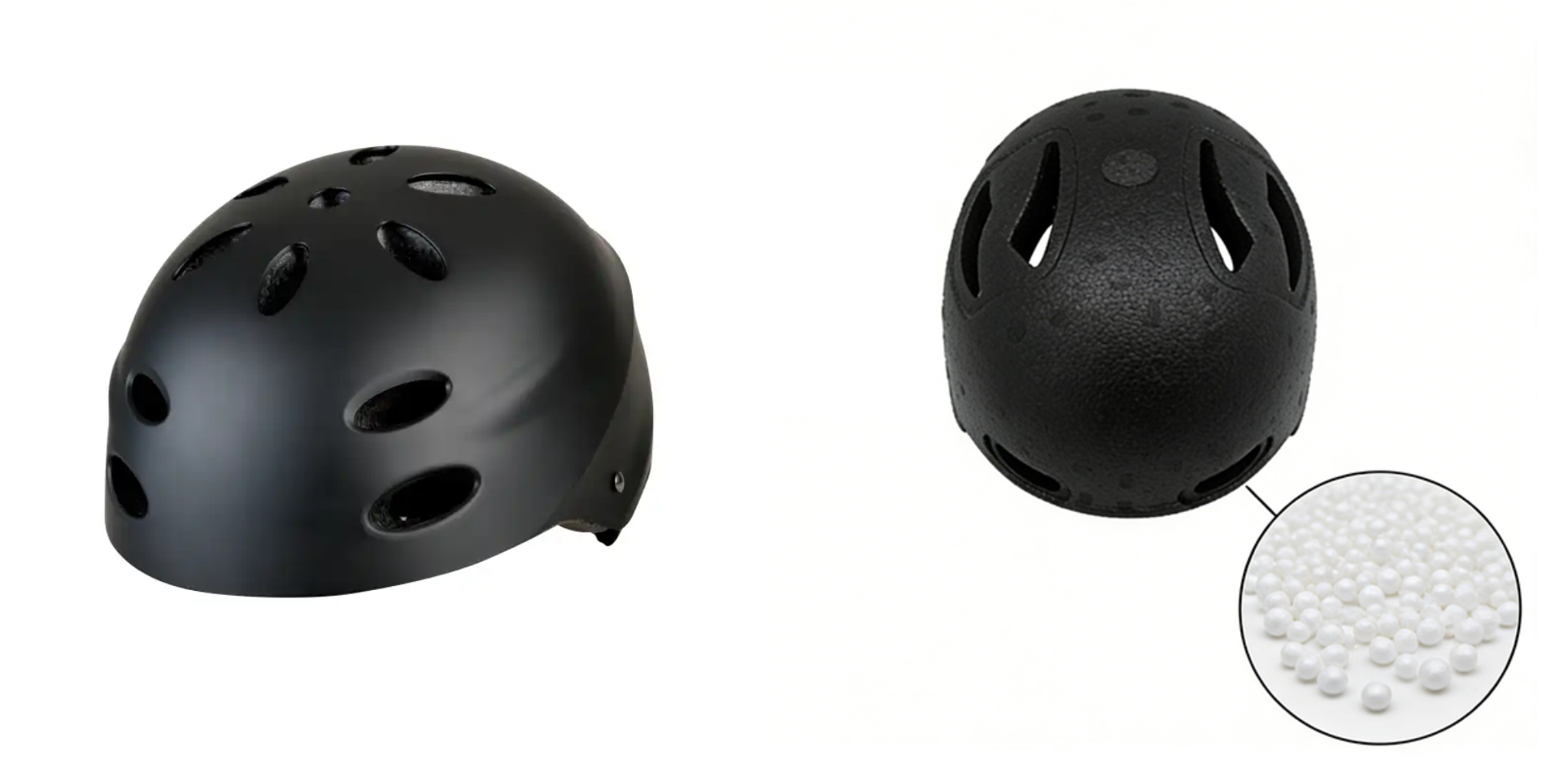
EPS Foam for sports helmets refers to a type of EPS granule used for manufacturing sports helmets. This material is a foamed polystyrene raw material specially targeted at the energy-absorbing structure of helmet liners. By adopting controlled pre-foaming and molding processes, it achieves a homogeneous and dense cell structure that maintains the lightweight characteristics, thus the helmet can effectively scatter and absorb energy upon impact. Besides, this kind of EPS granule has an excellent flow and uniform mold filling during the molding process, thus it can accurately replicate the complex curved surfaces as well as the structural details of the helmet liner. The end product is characterized by a high level of dimensional stability and is less likely to show uneven hardness. The molded EPS liner feels solid and will hardly break into pieces, thus it is capable of cushioning performance and structural integrity requirements of the helmet and as well makes the assembling process with the outer shell, padding, and other components, easier. It can be found in use in bicycle helmets, ski helmets, motorcycle helmets, and a wide range of other sports protective helmets.

What types of helmets can be produced with this material?
The product is an EPS bead from the raw material side that can be subjected to pre-expansion several times. After pre-expansion, curing, and molding with a special mold, it brings out the crucial cushioning structure of the interiors of sports helmets.
Bicycle helmet EPS liner
Skateboard, roller skating, and ski helmet cushioning layer
Motorcycle and off-road helmet energy absorption layer
Children's sports helmet safety liner
Multi-density or zoned energy-absorbing helmet structure
| Model | Particle size (mm) | Foaming ratio (times) | Typical Applications |
| P-103 | 1.2–1.6 | 70–90 | Lightweight sports helmets, cycling helmets |
| P-104 | 0.8–1.2 | 65–85 | Regular bicycle and skateboard helmets |
| P-105 | 0.6–0.9 | 55–70 | Helmets with higher energy absorption and structural requirements |
| P-106 | 0.4–0.7 | 40–60 | Multi-density or finely structured helmet liners |
Why is the right EPS essential for sports helmets?
EPS for use in helmets is designed differently from ordinary packaging and insulation EPS in terms of its core concept. After being expanded a number of times, such EPS particles have a shape close to a sphere and the pores inside are evenly distributed. A highly stable internal structure is thus achieved which, when subjected to impact, will not show an instant shattering pattern but rather a gradual collapse layer by layer. This is exactly the protective way of a helmet during an impact. The density of EPS beads for helmet liner is very flexible; a combination of different particle sizes and expansion ratios can be used to stably control the final density, thus allowing helmet manufacturers to offer sport-specific products with varying protection levels.
Is it suitable for helmet factories?
Daruwin's EPS beads for helmet liner material are especially compatible with sports helmet producers and exactly correspond to the real production flow of helmet products. It can be directly connected with the common pre-foaming machines and a variety of helmet-specific molding machines without the requirement of additional equipment modifications or substantial process changes. At the pre-foaming moment, the foam material is dry and loose, with good flow properties, so the material easily fills the complex curved surfaces and rib structures of the helmet liner when introduced into the mold. This efficiently prevents issues like uneven local density and inconsistent hardness that have a negative impact on the protective performance. Typically, the curing time is maintained between 4 and 12 hours, thereby offering helmet producers the flexibility to decide based on seasonal temperature variations and production planning, without compromising the overall production speed, thus it is more in line with large-scale continuous helmet production.
Why do helmet factories choose us?
The foaming and molding performance of EPS beads raw material used for helmet raw materials is quite stable, process parameters are relatively easy to control, and product quality can be easily controlled; the weight consistency of the molded helmet liner is always very high.
Even when production is repeated several times using the same mold, the weight and density can be maintained within a very stable range, which is essential for the fact that helmets can pass testing and certification. Daruwin not only offers a wide range of EPS granules specifications for customers, which makes it easier for them to meet different helmet structures and protection level design requirements, but also the stability of long-term supply can continuously support helmet factories’ new product development and mass production rhythms.
About Us:
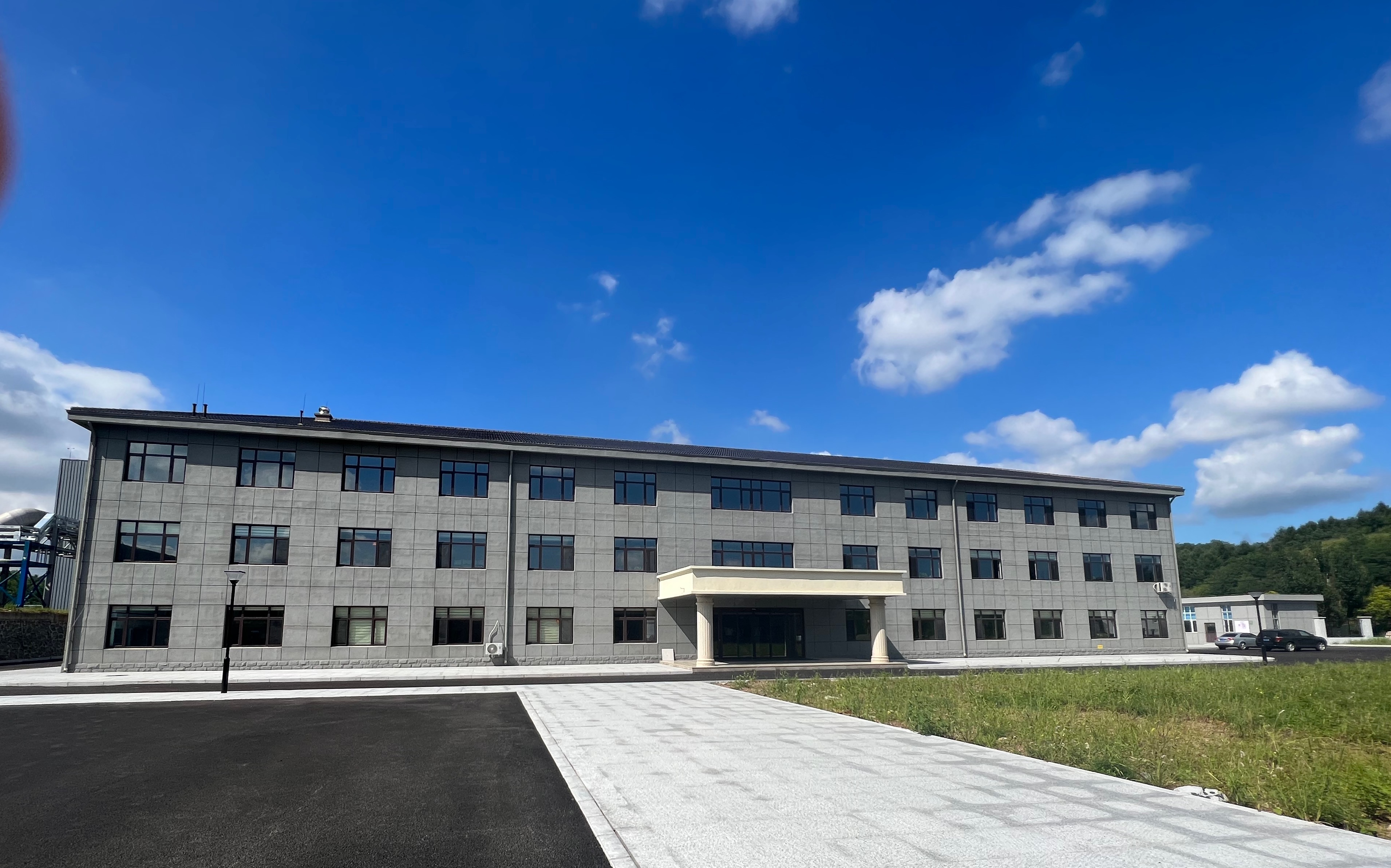
Daruwin plant is situated in the Fushun Petrochemical Zone and therefore, it is endowed with complete raw material advantages and a strong base for the industrial chain. The self-operated 185-acre EPS base of our group is fully fitted with state-of-the-art facilities and possesses an annual production capacity of 240,000 tons of graphite-grade and ultra-lightweight EPS which is used in thermal insulation, fire retardancy, and packaging. The company is continuously engaged in R&D and can change material parameters pretty flexibly in accordance with requirements of the project.